Friday, September 10, 2010

Digital Press

The final piece of a printing capability in any effective print shop operation is a digital press.

Take for example our digital press, this Canon machine.

"With this machine we can do 4-color quantities of your project as small as one copy," Tom Sadler said. Tom is President and an owner of Executive Press.

"This press adds just the right element to our mix of machines and capabilities,"Tom continued.

The machine was added to the operation at the request of a client who did a large-volume, product manual printing on a regular basis. Since then, Tom said, its capabilities have been applied to work done for other clients.

"Short run, long run and specialized digital work really shines on this machine, Tom added.

When shopping for a printing look to see the breadth of their capabilities and if digital is a part of the mix.

The Executive Pressman

Friday, September 3, 2010

Newsletters--electronic and printed

Reaching out to your constituents--clients, prospects and suspects--is critical in today's business environment. that's pretty obvious.

While many companies are leaning on social media to make contact, most are forgetting the personalization and the directness of newsletters. While social media is an outreach, it is more "broadcast" in nature. Couple that with a directed outreach of a newsletter and you are building rapport and a connection with your audience.

Electronic newsletters are good in that they land on your target's computer desktop or phone in box. Good information shared quickly makes you memorable.

For a more traditional audience or to supplement the electronic and broadcast outreach, a paper newsletter distributed via U.S. Mail is every workable, affordable and effective. Studies show they are still widely read.

The bottom line is that you should consider a targeted outreach via newsletter to your constituents as a part of your marketing mix.

The Executive Pressman

Friday, August 27, 2010

Traditional printing presses: real examples

These four traditional offset printing presses are found in our shop:

  • Itek 975
  • Ryobi 3302
  • Hamada B452A
  • Heidelberg Speedmaster

The Itek 975 is from the 1980s but is a workhorse. It does 2-color printing of envelopes for us.

The Ryobi 3302 does letterhead and 2-color jobs from 8 1/2 x 11 to 11x17 inches.

Only 5 years old, the sheet-fed Hamada handles volumes up to 9,000 sheets per hour. Able to do 4-color work, it is an automated plating machine and handles paper up to 14x20 inches.

The largest and most complex machine in our inventory is the Heidelberg. This sheet-fed machine handles paper up to 20x28 and up to 11,000 sheets per hour. Long runs and larger (catalogs, etc) are produced on this machine.

These four machines give us flexibility and capability few others can match.

The Executive Pressman

Friday, August 20, 2010

Traditional printing presses

Traditional printing presses are complex devices that are made up of subsystems and smaller parts. Like anything if you break them down to components, they are easier to understand.

The models and features we will talk about today are those of offset presses.

What does this mean to me? Well, the better you understand how the process works, the better you can match the right work to the right process. For example, choosing traditionally printed pages, books brochures over digitally printed versions of the same things.

Now, back to presses: The key parts are:
  • Ink tray(s)
  • Paper feeders
  • Plate surfaces and types

Four-color presses use more than one tray. Some are automatically controlled, some older presses still rely on the pressman to meter the ink(s).

Paper feeders range from copier-like trays to large stages holding large sheets of paper or rolls.

The plate surface and the blanket are where the image is transferred to the printed page. Powder sprayers are employed to make sure pages don't offset ink to the adjacent page or stick together.

The resulting images are of a different quality and presentation than a digital image. Each has its own application and presentation option.

The Executive

Friday, August 13, 2010

Proofing made easy: being clear

We've all done it: reviewed that design or document and when the final product came--there was an error of some kind.

You can beat this--easily. Here are a few simple rules:

  • Keep a markup copy of the document you sent to the printer or designer for reference to the next version.
  • Proof each change in detail--read the line backward, it helps you see the change better.
  • Do an overall scan of the page and document--especially headlines and photos.
  • Most printers and designers not only give you a place to initial, they will give you a checklist of what to look for. Follow it.
  • Look for your typical typos--"teh" for "the" is pretty common.
  • If you don't know color or PMS or CYMK standards, ask. Your printer will be more than happy to help you.
  • Note page count, numbers and bindery.

A few simple rules will result in a more complete and satisfying document.

The Executive

Wednesday, August 4, 2010

The Amazing Shrinking Machine


Think shrink.

No, not psychiatrist. No, not the over laundering of your favorite cotton shirt. We're talking print shop packaging here.

At Executive Press, we use a shrink wrapper to package finished goods after they are printed. The plastic wrap protects the finished catalogs, business cards, letterhead and other printed pieces for their trip to the client.

"No detail is too important," Jennifer Beaty said. "How it goes out the door is just as important as how it was produced," she said. Jennifer is co-owner and executive vice president of Executive Press.

Every detail is important.

The Executive Pressman

Monday, August 2, 2010

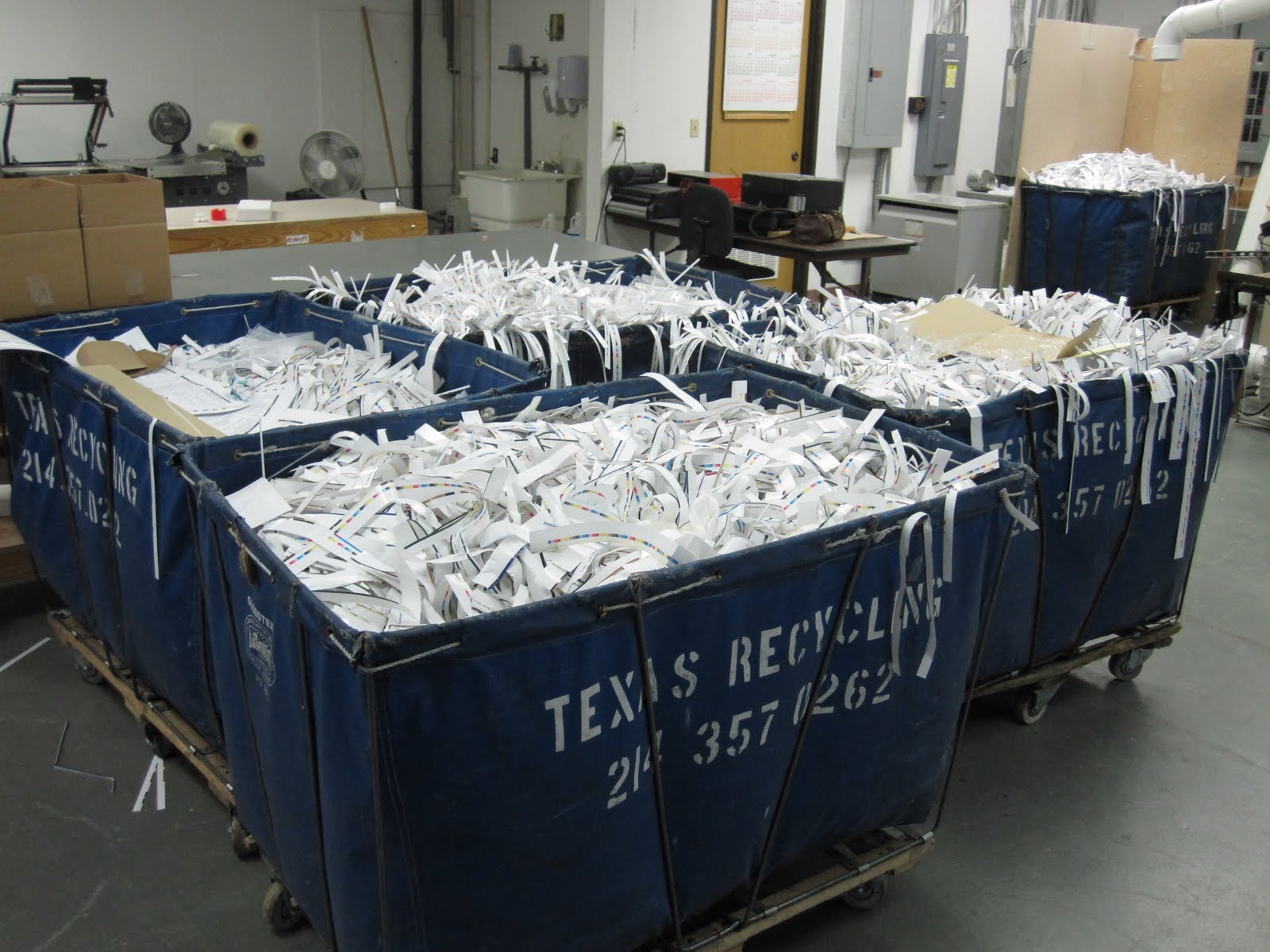
Recycling and your print supplier

Being green takes effort. In some cases, not a lot, but it does take effort.

For example, recycling the waste paper in a print shop.

This extra effort of recycling paper, ink and plates results in some good things for all concerned:

  • Less waste in the environment
  • FSC certification for the printer
  • A cleaner work space

Recycling paper is just one aspect of the paper part of this equation. Buying paper stock made from recycled and waste stock is also green.

FSC certification is recognition that a printer is really doing their part. Look for this designation when you choose your next print supplier. It means they use recycled paper and also practice recycling of used materials and supplies.

A cleaner work space means higher-quality work and a reflection of their attention to detail.

Another good thing to look for in your print supplier.

The Executive